
I Just Got Assigned Training Officer. Now What Do I Do?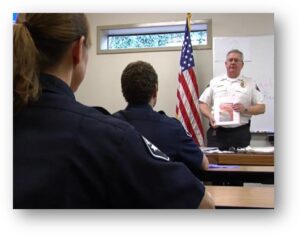
It happens all the time. The chief pulls you aside after a meeting, taps you on the shoulder, and says, “Congratulations, you’re our new Training Officer.”
Suddenly, the weight of the department’s readiness is on your shoulders. You look at the calendar and realize you have to deliver an engaging, safety-compliant, standards-aligned drill to a room full of varying skill levels—every single week.
 If you’re panicking, you’re not alone. Many newly minted training officers take on this massive responsibility with an Instructor I certification, or sometimes, before they’ve even had a chance to take an instructional methods course. If you are worried about meeting NFPA 1041 standard alignment, you aren’t just expected to know the material; you’re expected to know how to teach it, log it, and keep everyone coming back next week.
Take a deep breath. You don’t have to reinvent the wheel. Here is your quick-start guide on how to build a fire department training program that runs seamlessly without eating up your weekends

Step 1: Stop Writing Your Own Fire Instructor Resources from Scratch
The biggest mistake new instructors make is spending 10 hours on Sunday night drafting a PowerPoint presentation from scratch. You don’t have time for that, and frankly, you shouldn’t have to do it.
Your job isn’t to invent new fire service training lesson plans; your job is to deliver validated content effectively. Instead of starting from a blank page, look for comprehensive instructor toolkits that do the heavy lifting for you.
A complete curriculum should provide you with:
-
-
Customizable PowerPoints: Pre-built slide decks that you can tweak to fit your local SOGs.

-
Detailed Facilitator Guides: Step-by-step notes that tell you exactly what key safety points to highlight.
-
Pre-Formulated Quizzes: Objective questions ready to deploy to verify crew learning.
-

When you use validated fire instructor resources that align exactly with national consensus standards like the NFPA, you protect your department’s compliance and save your personal time.
Step 2: Use the “See-Do-Review” Model for Weekly Training Schedules
 If you are teaching adult learners—especially volunteer firefighters who are donating their limited free time—dense lectures are the enemy. Instead, you need to leverage practical adult learning models in the fire service by structuring your weekly training around a reliable, repeatable framework: See-Do-Review.
1. See (The Classroom):
Start with high-quality, scenario-driven video training. Firefighting is highly visual. Instead of reading lists of equipment from a slide, let your crew watch a dynamic, expert-reviewed video that demonstrates the exact tactic or skill in real-time. This sets a baseline of understanding for everyone in the room, from the 20-year veteran to the greenest recruit.
2. Do (The Drill Ground):
Immediately transition from the classroom to the bay floor or the training tower. Hands-on manipulation is where the muscle memory happens. Because your crew just saw the proper technique performed to standard, your hands-on time will be safer and far more efficient.
3. Review (The Debrief):
Wrap up the session by discussing what went well and what didn’t. Use objective question banks to quickly assess retention before they leave the station.
Step 3: Tackle Complex NFPA Compliant Fire Training Confidently
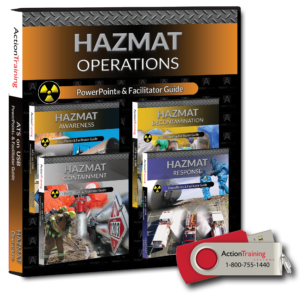
It’s easy to feel confident teaching a drill on pulling pre-connects. It’s a lot harder when the schedule calls for HAZMAT Operations, Fire Inspection standards, or intricate OSHA regulations.
As a new training officer, you don’t have to be a world-renowned expert on every niche topic—you need a trusted partner who is. Rely on instructional materials that explicitly map out compliance pathways, ensuring your firefighter training records and compliance remain flawless without you having to memorize the entire federal register.
How Action Training Systems Supports the Newly Appointed Training Officer
At Action Training Systems (ATS), we’ve spent nearly four decades building training content specifically for the people who run the drills. We know that providing engaging, high-quality drills is one of the most effective strategies for retaining volunteer firefighters.
 We don’t think you should have to buy a massive, complicated software platform just to get your hands on high-quality training media. We design our courses as complete instructor ecosystems. Whether you deliver training via an online LMS, stream it to a station TV, or need physical DVDs or USB drives for low-bandwidth rural bays, we provide the exact video curriculum, lesson plans, PowerPoints, and testing materials you need to look like a seasoned instructor from day one.
You take care of your crew. We’ll take care of the curriculum.
Ready to simplify your weekly training schedule?

Explore our transparent catalog pricing and see how the ATS curriculum can transform your department’s drills—no aggressive sales calls or high-pressure software demos required. [Check out our Fire & EMS Training products here]


