
Guest Blog written for ATS by Robert Avsec
Create an environment that doesn’t just support their individual motivation, but makes their motivational fire “grow”! How do you do that? By creating an atmosphere that supports “combustion.”
Firefighters learn early in their training on the necessity for fuel, heat, and oxygen to combine in the proper measures for the chemical reaction that we know as combustion or fire to occur. That process has been represented by the fire triangle:
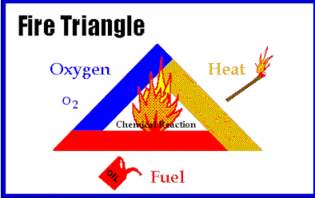
I believe the same principle—combining elements to create a chemical reaction—can be applied by volunteer fire service leaders in creating an “atmosphere” within their organizations that supports motivation. I also believe a volunteer fire department that has a high level of motivation amongst its members is also one that’s not losing incumbent members.
My experiences as a fire officer lead me to believe that we can motivate another individual. We can teach people how to do their job safely, effectively and efficiently. We can provide a sound organizational structure with policies and procedures that are congruent with an organization’s vision, mission, and values. And we can attempt to modify undesirable individual behavior, when necessary, using progressive discipline. But I don’t think that we can make anyone do something that they don’t want to do.
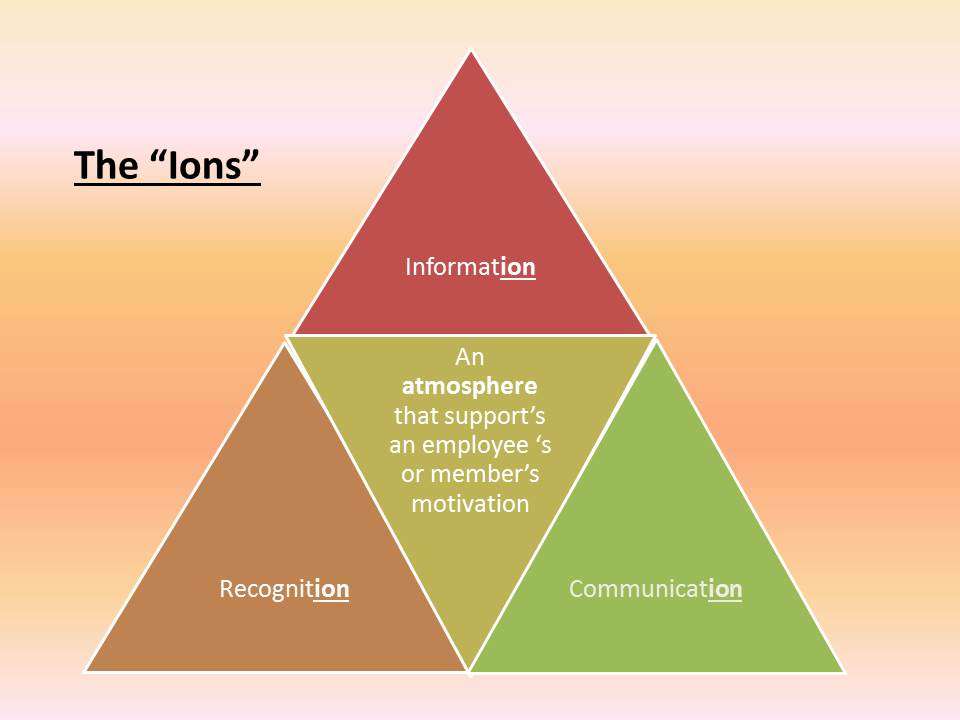
We can, however, create an “atmosphere” that either supports—or “snuffs”—the “flame” of the motivation that an individual brings to the table. We can do this by focusing on providing an “ion-rich” atmosphere using the organizational elements of information, communication, and recognition.
InformatION
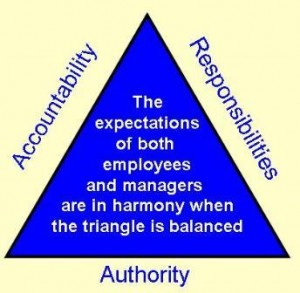
We can start by providing everyone in the organization with a clear picture of:
• Who we are;
• What we stand for; and
• Why we do what we do for the people we serve.
Then we make sure that we provide every individual with a set of clear job responsibilities, the authority to carry out those responsibilities, and measures of accountability (You can read another of my blogs on Responsibility, Authority, and Accountability. And lastly, we provide the individual with the knowledge, skills, and abilities to do their job.
CommunicatION
We provide effective and efficient lines of communication that work upward and downward in the organization. We effectively use documented policy, procedure, and processes to guide operations throughout the organization; we use those same management tools to make necessary changes in the “way we do business” (No “management by memo!).
We have more “tools” for communicating within our organizations than ever before, but how effectively are we using them? For example, sending an e-mail out is efficient communication, but how often do we find it ineffective? Posting information on organizational websites, on the Internet or on an intranet, may ensure maximum “broadcast”, but how do we ensure that the information is received and understood?
Both examples are “one-way” communication; if the receiver doesn’t send some kind of response back, the sender has no way of knowing that the message was received, and more importantly, understood. (We practice confirmed communication on the emergency scene, right? So why not practice confirmed communication during the other 95 percent or so of our day?). Does your organization have an internal communications plan to keep its employees or members informed and educated?
RecognitION
Of the three “ions” necessary for an atmosphere that supports motivation, this one is perhaps the least abundant in many organizations. Recognition must start at the “grassroots”, i.e., with the first-line supervisor and colleagues. Everyone likes to know that they’re doing a good job and that their efforts are appreciated.
Several schools of business, e.g., Harvard Business School and the Wharton School of Business at the University of Pennsylvania, have conducted studies over the years to ascertain what management behaviors have the most positive influence on an employee’s work performance.
The #1 Response? Feedback from their first-line supervisor on a regular—daily or weekly—basis (Typically between 60-70 percent of respondents). The follow-up question is typically, “How often do you get such feedback from your supervisor on a regular basis?” The response to that question? Usually only about 30+ percent of survey respondents indicated that they get such recognition.
Now the study looked at an employee/employer relationship, but I submit that its results are just as applicable in a volunteer fire department, perhaps even more so. An employee might be somewhat mollified in “accepting” their work environment because they need the job and the paycheck that comes with it. But volunteer firefighters don’t have a paycheck coming, so they are less inclined to stay where they don’t feel valued.
People like to know that their efforts and positive outcomes are acknowledged, and they also want to know when their work is not “up to par” so that they can do better. What they don’t like is hearing nothing at all, or only hearing about it during a heated exchange with an officer or colleague because something went wrong.
Resources for Recognizing Volunteer Performance
Creating a variety of means for recognizing the efforts of your department’s personnel does not have to be as challenging as it seems. The National Volunteer Fire Council and Fire Corps are two national organizations that “know” volunteer fire departments and volunteers in general. Both of those organizations have a wealth of information and resources on their websites for creating a meaningful volunteer recognition program in your department, as well as developing effective recruitment strategies.
So, what’s the “climate” like in your organization?
For more information on Action Training Systems video resources call 800.755.1440 ext 3 or email info@action-training.com
 Battalion Chief Robert Avsec (Ret.) served with the Chesterfield (Va.) Fire & EMS Department for 26 years. He was an active instructor for fire, EMS, and hazardous materials courses at the local, state, and federal levels, which included more than 10 years with the National Fire Academy. Chief Avsec earned his bachelor of science degree from the University of Cincinnati and his master of science degree in executive fire service leadership from Grand Canyon University. He is a 2001 graduate of the National Fire Academy’s Executive Fire Officer Program. Since his retirement in 2007, he has continued to be a life-long learner working in both the private and public sectors to further develop his “management sciences mechanic” credentials. He makes his home near Charleston, W.Va.


