
 Guest blog written for ATS by Robert Avsec
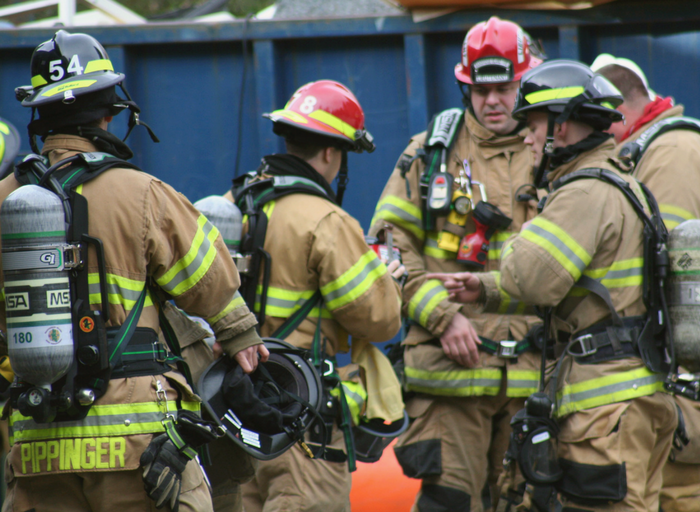
Training and preparation should be a significant part of every firefighter’s career, whether it is their chosen profession or they volunteer their time to their community. First, it’s the only way they’ll have the required knowledge, skills and abilities to be a safe, effective and efficient firefighter.
Secondly, training done with one’s peers is a powerful means for developing teamwork and camaraderie, both important qualities for firefighting (After all, it is a “team sport”!).
So, whether you’re a company officer in a career or combination department, or you’re a training officer for your volunteer fire department, here are some key areas for your training focus that will help you conduct training that matters.
1. Knowing your district
This involves more than just knowing the streets and roads in your response area “like the back of your hand”. While that aspect of knowing your district is important, so are these other aspects:
• Hydrant locations. Not only where they are, but what kind of water flow can they deliver. (I recently saw a hydrant in a neighboring community that has a utility pole positioned directly in front of the hydrant’s steamer connection. Good luck hooking up to that, right?)
• Areas requiring long hose lays. And not just long water supply hose lays, but also structures, e.g., apartment and condominium complexes where your pre-connected fire attack lines will not reach.
• Buildings under construction. These buildings “in the making” provide great opportunities to see modern building construction techniques and discuss how fire impingement will affect structural members and structural integrity. These buildings under construction also provide an opportunity to get good photographs for use in future classroom training sessions (When the weather is not great for getting outdoors).
• “Big box” buildings. Any structures in your district greater than 40,000 square feet in dimension. Like those apartment complexes, reaching interior portions of such structures will require stretching supply lines that can be gated down to 1 ¾-inch fire attack lines.
The key characteristic for all the above is: you have to get out of the fire station and go do it.
2. Knowing your equipment
Regularly review the proper operating procedures for both new equipment and old equipment. It may be months between times that a piece of equipment gets used on a call. Get it off the rig and go over it with everyone. You might know something others don’t and vice versa. Talk about what other equipment can be used for the same task if the primary tool fails or is not available.
Discuss what tools you have and why; newer members need to know the “why” to truly understand what the tool can be used for (Don’t assume that even the “veterans” know this information either).
3. Knowing your apparatus
Conduct equipment location drills for the equipment and tools carried on your fire apparatus. This also has the added benefit of identifying inefficiencies in where equipment and tools are located. Wouldn’t it be more advantageous to have all the ventilation equipment located in close proximity to each other? Or to have all your hose appliances and adapters in one compartment?
4. Knowing your SOGs
Every department has them (or should), but all SOGs are not created equally. Gordon Graham is an expert in public safety risk management for operations. Graham states that all emergency operations and tasks can be categorized using two key principles of risk management: risk and frequency.
The risk is not necessarily physical risk to responders (though it could be) but rather the risk to the organization and its people if the operation isn’t completed safely, effectively and efficiently. The following matrix from Graham illustrates how SOGs can be categorized four ways:
• High Risk/Low Frequency (Hazardous materials response; multiple casualty incidents; active shooter incidents)
• High Risk/High Frequency (Responding to alarms; using personal protective gear and SCBA; response to EMS calls; using a Personnel Accountability System)
• Low Risk/High Frequency (Completing apparatus and equipment checks; doing fire code inspections; conducting training drills)
• Low Risk/Low Frequency (Not many of these in our line of work)
Take note of the HR/LF box that’s highlighted in red. For High Risk/Low Frequency tasks or operations, Graham says that two additional components factor in: Discretionary Time (DT) and Non-Discretionary Time (NDT).
DT means that responders have some time to think about what they’re about to do, e.g., consulting the Emergency Response Guide on your apparatus when confronted with a hazardous materials spill. NDT means you’re likely going to have to “go with what you know” due to the speed at which the emergency is progressing, e.g., an active shooter incident.
What does all of this mean in regards to training on your department’s SOGs? I’m with Graham on this one: it means focusing first on your SOGs that fall into the HR/HF box on the matrix. Mastery for those things you do on a regular basis to ensure the right outcome every time.
Then direct your training efforts towards those SOGs that fall into the HR/LF box with a DT component. Why? Because if you don’t know what reference resources you have at your disposal (manuals or the computer on your apparatus), it’s not really Discretionary Time, is it?
5. Review Firefighting Videos
We live in the information age where we have access to thousands of videos of firefighting operations that are posted online. One of my post-Fire & EMS career “gigs” involved reviewing firefighting videos from across the Internet as selected by my editor and creating a training guide for each video that firefighters and officers can use to learn from the actions of others.
To date, I’ve reviewed dozens of such videos, involving about an equal number of occupancy types, and I’ve seen many actions by firefighters and officers that literally made “the hair on my neck stand up.” This is a blog that I wrote on my experiences that I believe can be useful to any company officer or training officer in making effective use of on-line videos for training.
Look for videos that matches what you want to cover in training, for example, several videos with different colors of smoke when you want to cover how to assess what those changes in smoke color mean. From there, develop a short set of questions to use in reviewing the video with your firefighters.
6. Post Incident Reviews
Some of the best training is “just in time training”, that is, training immediately before engaging in the task. Hard to do in the business of firefighting, but training immediately after the task is completed can be just as effective.
When you return from a call for service, gather your crew and spend 10-15 minutes with them discussing these three questions:
• What went well?
• What could we have done better?
• What will we do if we respond to the same situation ten minutes from now?
This was a practice I learned early in my fire service career and I used it every day from my promotion to company officer right through the end of my career as a battalion chief.
As a battalion chief, whenever possible, I would gather my company officers off to the side when the fire operation was complete and we’d go through those three questions. I believe they appreciated the learning opportunity as much as I did. And yes, one time we actually responded to a similar call not an hour after we’d all gotten back in quarters. Karma.
For more information on Action Training Systems video resources call 800.755.1440 ext 3 or email info@action-training.com
 Battalion Chief Robert Avsec (Ret.) served with the Chesterfield (Va.) Fire & EMS Department for 26 years. He was an active instructor for fire, EMS, and hazardous materials courses at the local, state, and federal levels, which included more than 10 years with the National Fire Academy. Chief Avsec earned his bachelor of science degree from the University of Cincinnati and his master of science degree in executive fire service leadership from Grand Canyon University. He is a 2001 graduate of the National Fire Academy’s Executive Fire Officer Program. Since his retirement in 2007, he has continued to be a life-long learner working in both the private and public sectors to further develop his “management sciences mechanic” credentials. He makes his home near Charleston, W.Va.


