
Environmental Changes
 Building on the skills of structural firefighters and increasing their knowledge about wildfire firefighting is a critical part of WUI fire response. Population growth, expansion into wilderness areas, and climate change have made wildland/wildland-urban interface (WUI) fires more common and more devastating every year. Dwellings, structures, and other infrastructure built in areas adjacent or intermixed with the wildland environment add another source of available fuel.
More Firefighting Resources Needed
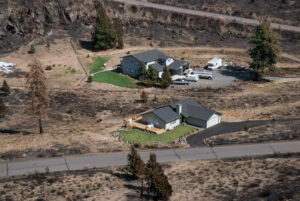 The frequency and severity of wildfires and WUI fires have increased the need for more structural fire support resources. It has also highlighted the importance of expanded knowledge and training for structural firefighters who will support WUI fire suppression efforts. Operations in the WUI environment require a unique set of skills and knowledge that aren’t part of standard firefighter training.
 Training Recommendations Made for Structural Firefighters

In 2003 the National Association of State Foresters issued a report to Congress that described the expansion of wildland fire responsibilities on the U.S. structural fire service. This report focused on the rural and volunteer organizations that commonly served communities near WUI environments.
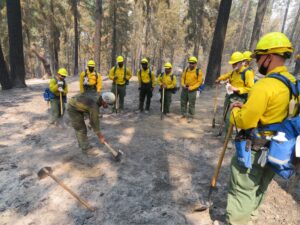 There were several important training-related recommendations made to increase the safety and the capacity of wildland fire suppression operations of these organizations. In addition, the report encouraged the Northwest Wildfire Coordinating Group (NWCG) member organizations (USFA, USFS, IAFC, NFPA) to participate in creating a training and qualifications reciprocity system.
Identifying the Gaps in Firefighter Training
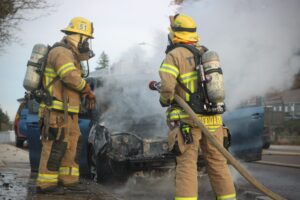
The group analyzed the standard firefighter training and identified the gaps that a structural firefighter needed when working in the WUI environment. The “Skills Crosswalk” was a result of this effort.
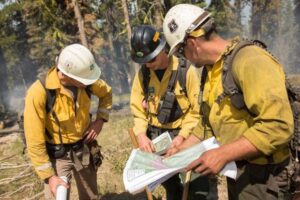 This is a standardized but dynamic resource that identifies the wildland skills and knowledge that is needed to operate safely at a WUI incident during their initial attack, or when working with state, and federal wildland firefighter agencies. Using “Crosswalk” focuses on practical learning exercises that aren’t addressed in a structural firefighting training curriculum.
 Meeting Certification Requirements for the WUI Environment
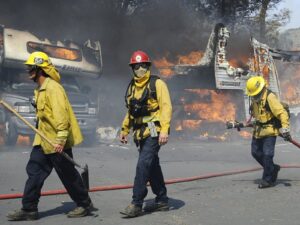
When agencies include this additional information into their training programs it can allow members to meet the equivalency and certification standards of the National Wildfire Coordinating Group (NWCG) or the standard determined by their AHJ.
It also reduces the amount of training needed for certification by recognizing training and skills that structural firefighter already has.

New Wildland Series From Action Training Systems
 Built on this same concept, this new 7-part series from Action Training Systems presents the knowledge and skills that these sources have identified for structural firefighters to safely work in the wildland/WUI environment. “Wildland Urban Interface Firefighting for the Structural Firefighter” can help you meet your training goals.
Fulfilling WUI Training Requirements for The Structural Firefighter
 The courses are designed to provide students with an introduction to concepts and the hands-on skills that are required according to the National Wildfire Coordinating Group (NWCG), and as identified in the Skills Crosswalk.
Information presented will help fire service members in meeting the training requirements of NFPA 1051 and 1143 (soon to be consolidated into NFPA 1140) when assisting with operational activities at wildland or Wildland Urban Interface (WUI) fires.
Engaging & Dynamic Wildland Training
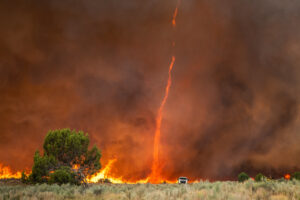
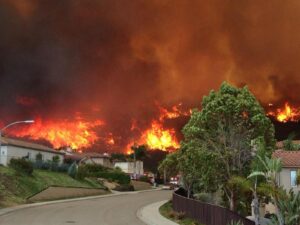
Your students will find this 7-part series, “Wildland Urban Interface Firefighting for the Structural Firefighter” to be engaging and dynamic. Actual wildland and WUI footage from some of the most destructive fires around the United States in the past few years is featured.
In addition, ATS worked with fire departments and wildfire instructors in and around the Pacific Northwest to create scenarios and demonstrate skills and operations used in the WUI environment. Exceptional 3-D graphics help to illustrate weather effects, topographical features, fire behavior, and other scene tactics.
Critical Information & Skills for WUI Firefighting
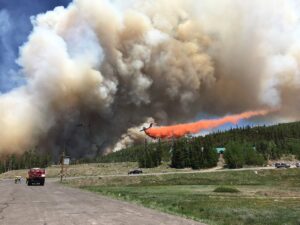
The learning objectives in the series include identifying fuels, forecasting fire behavior, understanding weather and wind effects in the WUI environment. Skills include size-up considerations, fire control strategies, creating firelines, performing structure triage, and hazard control. Hazard mitigation and scene safety are emphasized including tool and equipment use, thunderstorm safety, last resort survival, vehicle, and aviation safety.
Variety of Instructor Tools For WUI Training
In addition to the videos that are available on DVD, USB, or streaming online, the titles are developed into interactive online courses that test knowledge and comprehension. Instructor support materials are also available for each title, these include a facilitator guide, with lesson outlines, student handouts, discussion questions, suggested scenarios, quizzes, and tests. PowerPoints© and question banks are also available.
Decision-Making Based on Wildland Firefighting Knowledge
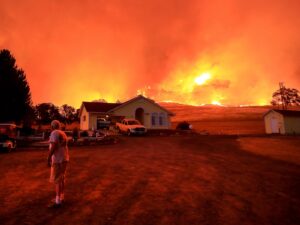
Structural firefighters trained for the WUI environment will be able to make good decisions regarding their safety. Understanding the effects of weather, topography, and fuels and how they influence fire behavior and their crews’ tactical operations is critical.
Enhancing Safety & Cooperation With Wildfire Firefighters
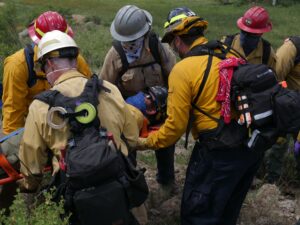
Having firefighters with wildland/WUI skills also enhances your wildland fire protection capacity for your community. It will help to increase your department’s cooperative firefighting efforts with neighboring jurisdictions, as well as with federal wildland firefighters.
For more information about the 7-part series on Wildland Urban Interface Firefighting for the Structural Firefighter www.action-training.com


