
 Improving Hazard Recognition, ERG Use, and Early Scene Safety Decisions for Fire Departments
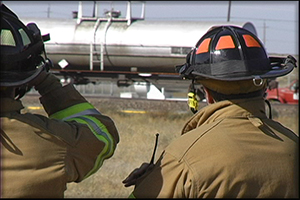
“What do we have?”
Three words. Spoken in the first seconds on scene. In a hazardous materials incident, the answer to that question determines everything that follows.
Picture this: It’s 0200. You arrive at what dispatch called a vehicle accident. The driver is unresponsive. There’s an unusual shimmer on the pavement. A second bystander is coughing. Each of those details is a data point — and awareness-level training is what helps your crew read them correctly.
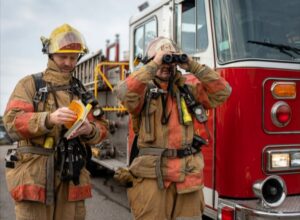
For fire departments and first responders, the first size-up determines the outcome. In HAZMAT incidents, early recognition is what prevents a routine response from escalating into a multi-agency event.
Not every HAZMAT incident announces itself with placards, labels, or visible vapor clouds. More often, it looks like a routine call: a vehicle accident with an unusual leak, a medical call with an unclear environmental exposure, a dumpster or structure fire behaving abnormally, or a scene where conditions simply don’t match what dispatch described.
Missing those early warning signs can quickly escalate risk to firefighters, EMS personnel, and the public. That’s why HAZMAT awareness training for firefighters and first responders remains a critical fire service competency, not just a compliance requirement.
Building the Foundation: HAZMAT Awareness Training for Fire Departments
Modern HAZMAT awareness training focuses on the first and most important responsibility of initial arriving companies: recognize the hazard, avoid contamination, and initiate proper notifications. This training aligns with current fire service standards, including OSHA HAZWOPER (29 CFR 1910.120), NFPA 470 — the newly consolidated standard for HAZMAT/WMD responders — the NFPA 704 Hazard Identification System, and the Emergency Response Guidebook (ERG).
For Training Officers, alignment with these standards matters — but the real goal is operational readiness, not just regulatory compliance. Because at 0200 hours on a highway or in an industrial zone, responders rely on training, not reference manuals.
For Training Officers, the goal is operational readiness, not just regulatory compliance. Because at 0200 hours on a highway or in an industrial zone, responders rely on training, not reference manuals.
HAZMAT Recognition: The First Critical Decision on Scene
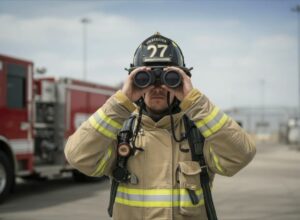
Effective hazardous materials recognition training develops the ability to identify early indicators before entry or exposure. Those indicators fall into three broad categories that responders should evaluate simultaneously during size-up.
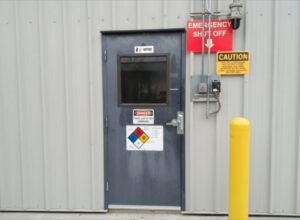
Scene Size-Up Indicators
The first category is scene context. Occupancy type establishes risk profile immediately — industrial, agricultural, residential, and transport environments each carry different HAZMAT probabilities. Beyond occupancy, responders should watch for incident behavior that doesn’t match expectations and for unusual symptoms patterns across multiple patients, both of which can signal an environmental cause.
 Container & Transport Indicators
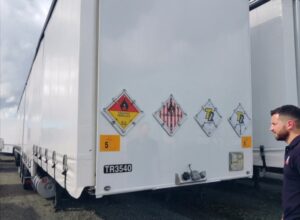
The second category is container and transport indicators. Tankers, cylinders, drums, and bulk containers each have distinct hazard profiles, and DOT placards, labels, and markings provide critical identification from a safe distance. Visible leaks, vapor release, corrosion, or staining on any container should immediately elevate suspicion.
Environmental & Sensory Clues
The third — and most urgent — category is environmental and sensory clues. Unusual odors, vapor clouds, hissing or venting sounds, dead vegetation, or the absence of wildlife sounds can all indicate a release. The critical warning here: if you can smell it or hear it, you may already be too close.
| ⚠️ If you can hear it or smell it, you may already be too close. |
TRACEM-P: A Framework for Structured Size-Up

The TRACEM-P framework helps structure early hazard recognition without overcomplicating the process. It prompts responders to consider seven hazard dimensions:
- Thermal: heat or cold hazards from the material
- Radiological: radiation sources or contamination
- Asphyxiation: oxygen-displacing or suffocating agents
- Chemical: toxic or corrosive substances
- Etiological: biological or infectious agents
- Mechanical: physical injury hazards (pressure, explosion)
- Psychogenic: stress or behavioral impact on responders
At the awareness level, the goal is simple: recognize the hazard early and prevent unnecessary exposure. TRACEM-P provides a mental checklist that can be run quickly on arrival without requiring specialized equipment or deep technical knowledge.
HAZMAT Identification: Supporting Safe Operational Decisions
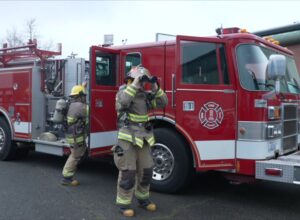
Once a potential hazardous materials incident is identified, the next challenge is gathering critical information without entering the hazard zone. This requires practical proficiency with several core skills. Responders need working knowledge of DOT hazard classes 1 through 9 and their characteristics, along with confident placard and labeling recognition from a distance.
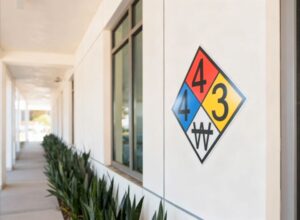 Equally important is the ability to use the Emergency Response Guidebook (ERG) under actual field conditions — not just in a classroom — and to interpret the NFPA 704 hazard diamond accurately.
For Training Officers, these skills must be reinforced regularly through scenario-based, hands-on training, not just classroom review. Under stress, decision-making depends on repetition, not recall.
What Does NFPA 470 Actually Require at the Awareness Level?

NFPA 470 consolidates previous HAZMAT/WMD standards into a single framework for responders at all levels. Understanding what it actually requires — operationally, not just on paper — is essential for any Training Officer building or evaluating a HAZMAT program.
- Recognize the presence of hazardous materials using available cues (placards, labels, container shapes, occupancy type)
- Identify the hazard from a safe distance using the ERG and other reference resources
- Understand the limitations of their training and avoid taking offensive action
- Notify appropriate authorities and initiate the emergency response system
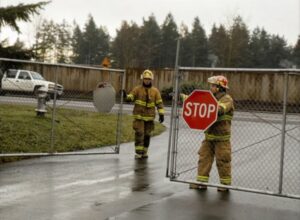
- Implement basic protective actions, including isolation and denial of entry
Training programs aligned to NFPA 470 provide a defensible foundation for compliance — and more importantly, a practical skill set your crews can apply in the field.
Why Awareness-Level HAZMAT Training Saves Lives

A core principle in fire service HAZMAT operations is role discipline. Awareness-level responders are trained to do three things: recognize the hazardous materials situation, isolate the area, and notify appropriate resources. When performed correctly, this approach reduces firefighter and EMS exposure, prevents scene escalation, improves coordination with HAZMAT teams, and maintains incident control during early operations.
The stakes of getting this right are significant. In many incidents, the first-arriving company determines whether the event remains manageable or escalates into a major HAZMAT response. That determination happens in minutes, before specialized resources arrive, and it depends entirely on the awareness-level decisions made at the front door of the scene.
Why Fire Departments Must Reinforce HAZMAT Awareness Training
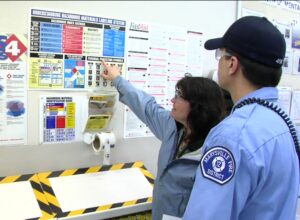
For many departments, HAZMAT awareness training becomes a compliance task — completed once and revisited only when required. The operational reality, however, is different. HAZMAT calls are infrequent, field experience is limited, and recognition skills degrade without regular reinforcement. A crew that passed awareness training three years ago may not respond the same way as one that ran a recognition scenario last month.
Regular refresher training directly improves scene size-up accuracy, early hazard recognition, ERG confidence under pressure, and decision-making in low-information environments. The objective is not memorization — it is automatic recognition under stress. Those are two very different cognitive processes, and only one of them holds up at 0200 hours.
 The Fire Service Bottom Line
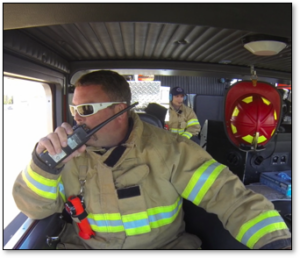
Most firefighters will not be the ones mitigating a hazardous materials incident. But they will be the ones who decide, within the first minutes, whether the situation remains controlled or escalates into a large-scale HAZMAT response. That decision begins with recognition — and recognition begins with training.
Strong HAZMAT programs are built on recognition, not response. Awareness-level training is where operational safety begins, and where early decisions determine the outcome of the entire incident.
Training Officer Checklist: Is Your Program Ready?

Evaluate your department’s current HAZMAT awareness program against these questions:
- Will crews recognize early HAZMAT indicators on arrival?
- Can they safely interpret placards and scene clues from a safe distance?
- Are they confident using the ERG under stress, not just in the classroom?
- Does your training align with NFPA 470 awareness-level competencies?
- When did your crew last run a HAZMAT recognition scenario?
If gaps exist in any of these areas, strengthening your HAZMAT awareness program should be a priority — not a future agenda item.
Ready to close the gap in your department’s HAZMAT readiness? The updated HAZMAT Awareness series from Action Training Systems is built specifically for today’s fire service — aligned to OSHA HAZWOPER and NFPA 470, and designed for flexible delivery that fits your training schedule.
[Preview the Series →]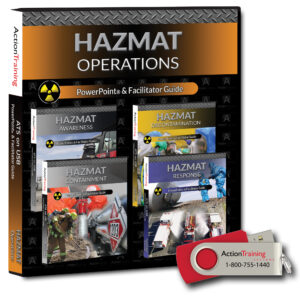 Don’t wait for the next incident to find out where your gaps are.
Training Officer Takeaway
Strong HAZMAT programs are built on recognition, not response. Awareness-level training is where operational safety begins, and where early decisions determine the outcome of the entire incident.


